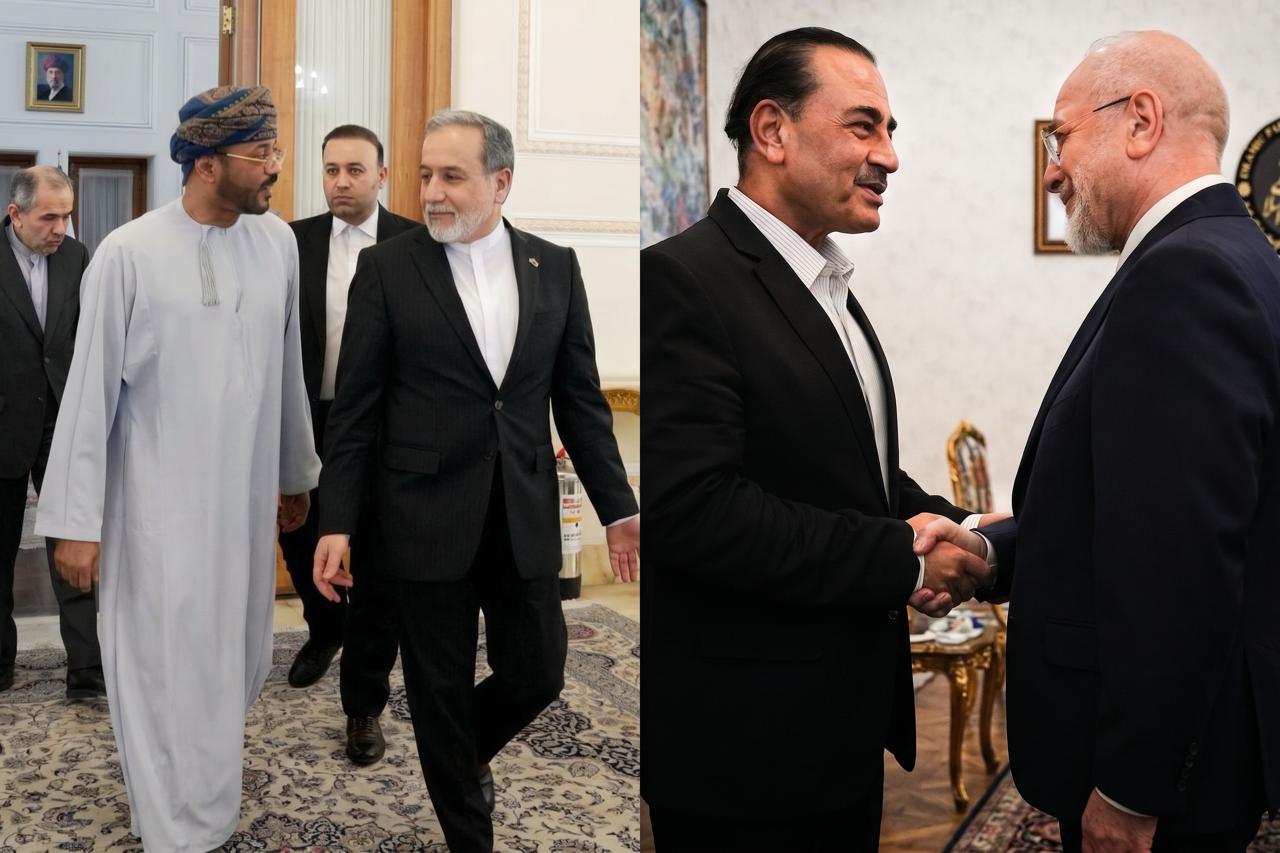
Over the past week, the tarmac in Tehran has witnessed a highly revealing procession of diplomatic arrivals. With the Qatari Prime Minister expected to touch down shortly after back-to-back visits by the Omani Foreign Minister and Pakistan’s Army Chief, the sheer density of this diplomatic traffic demands rigorous strategic decoding. To the untrained eye, this might appear as routine mediation. In reality, it is a profound regional reaction to the structural instability currently being sown by Washington.
Regional capitals are dispatching their highest-ranking diplomats and military officials to Tehran not because they believe Iran is on the verge of surrender, but precisely because they understand a geopolitical reality that Washington continues to ignore: the American policy of economic suffocation will not yield Iranian capitulation. Instead, it will only breed severe, cascading insecurity, effectively turning the surrounding states into shock absorbers for US adventurism.
As this crisis unfolds, the glaring contrast in statecraft between Tehran and Washington has become impossible to ignore. Iran’s posture remains relentlessly consistent and legally anchored: the solution is the full, verifiable reimplementation of the Islamabad Memorandum of Understanding (MoU). Conversely, the United States constantly rotates its coercive tools, jumping from kinetic military action to financial blockades, while utterly failing to articulate a clear, coherent political objective.
Washington’s abrupt pivot to an “Economic D-Day” is being advertised as a projection of overwhelming American strength. However, it is the exact opposite. It is a tacit confession that their previous military campaign fundamentally failed to alter Tehran’s strategic calculus. This constant shifting of tactics, from the battlefield to the Treasury Department, is the ultimate symptom of strategic exhaustion and policy bankruptcy. Power without a viable strategy is merely destruction, and Washington has realized that it cannot bomb its way to a new regional order.
Yet, perhaps the most revealing aspect of current US behavior is its inherent, fatal paradox. Washington is loudly declaring a total economic and naval siege from the briefing rooms of the White House, while simultaneously utilizing the very mediators visiting Tehran to send quiet backchannel messages to the Iranian leadership. This dual-track approach exposes a profound self-doubt within the US administration regarding the actual efficacy of its own blockade.
The domestic calculus driving President Trump’s maneuvering is highly cynical. By maintaining a parallel diplomatic track beneath the radar of his “Operation Economic Outcast” rhetoric, the White House is frantically attempting to weave a public relations safety net ahead of the November midterm elections. If any agreement is reached through these regional mediators, Trump fully intends to instantly spin it as a historic “victory” produced entirely by his new economic pressure campaign, effectively masking his battlefield failures and strategic retreats.
Furthermore, the manner in which the United States is attempting to strong-arm the globe into suffocating Iran exposes the severe, tightening constraints of American unipolarity. The era of total global compliance is over. China has already expressed explicit opposition to this new wave of the US economic pressure campaign, signaling that it will not assist Washington in starving a critical Eurasian partner.
The harder Washington insists on this unilateral economic blockade, the more it will expose the limits of its own power. Beijing and the broader Global South are looking at the shifting geopolitical map and making their own calculations. They will not sacrifice their long-term strategic considerations, their energy security, or the integration of the Eurasian landmass merely to satisfy the short-term demands of an American election cycle.
Ultimately, the United States finds itself trapped in a cycle of its own failed policies, substituting genuine grand strategy with loud rhetoric and economic theater. In stark contrast, Iran’s approach of “Indivisible Security” – the promise that if Iranian commerce cannot flow safely, no commerce in the region will flow safely – holds firm. The flurry of mediators in Tehran is proof that the region understands this approach is not a bluff. The only viable path back to stability is not for the United States to invent new ways to violate its agreements, but simply to honor its signature.